More than a parental leave policy
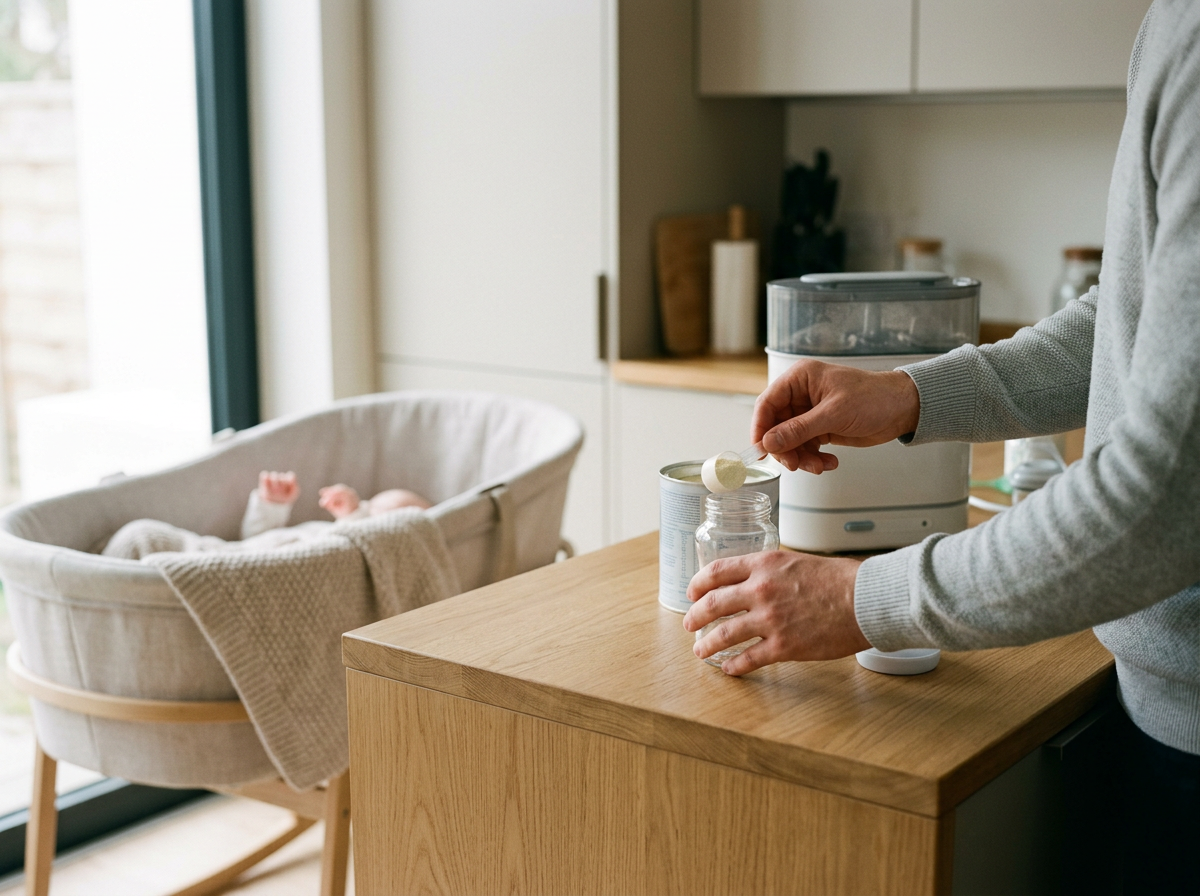
How a supportive workplace reshaped the way we shared care, and why workplace culture matters just as much as the policy itself.
Recent research from The 100% Project found that 71% of employed Australian men support equal parental leave, making it the most strongly supported gender equity initiative examined.
Yet relatively few fathers take extended leave to become primary caregivers. If so many men support it, why do so few take it?
After watching my partner take 12 weeks of parental leave, I don’t think the answer lies with the policy itself. I think it lies in the culture surrounding it, and for us, that culture was obvious from the very beginning. Taking that leave felt like a no-brainer for our family: more time with our children, and an opportunity we know not every family has.
The difference wasn’t simply that his employer offered parental leave; they encouraged him to take it. On his last day, he handed back his laptop and was removed from work WhatsApp, with no expectation that he’d stay across projects, answer emails, or be available if something came up. That created the conditions for him to be fully present at home.
When familiar roles become the default
Our youngest was ten months old, our eldest three and a half, and like many families, we’d settled into roles without consciously deciding who would do what.
My partner had always been an equal parent. The difference wasn’t his willingness to share the load. It was that I’d spent more time at home after having children, working part-time while building my business, so the invisible responsibilities naturally became mine.
I became the person who knew when we’d run out of toothpaste, which child had outgrown their shoes, and what needed to go on the shopping list: the small decisions that keep family life running.
Research suggests this is far from unique: in 78% of Australian couple households, the mental load of raising children is always or usually carried by the mother, even where hands-on care is shared (Australian Institute of Family Studies, 2024).
Preparing for my partner’s leave brought that invisible work into focus. We talked through routines, meals, shopping and childcare logistics: everything that had become second nature to me. He already knew how to parent; what we transferred was the knowledge behind family life, so he could take full responsibility while home, and I could step back into focusing on my work with confidence.
More than time away from work
A few weeks in, I realised I was approaching my work days differently. I wasn’t mentally jumping ahead to daycare pickup, wondering what was for dinner, or planning the next day; someone else was genuinely responsible for those decisions.
For the first four weeks, I didn’t cook dinner once: not on a weeknight, not even on the weekend. The relief wasn’t standing at the stove; it was no longer deciding what the kids would eat, whether we’d run out of ingredients, or what had to go on the shopping list. Handing over dinner meant handing over dozens of tiny decisions accumulated over the years, and in return I gained something I hadn’t realised I’d been missing: uninterrupted headspace.
Turning policy into practice
Providing parental leave is only part of the equation. Whether fathers take it, and take it fully, depends largely on the culture around it.
The 100% Project’s Breaking Dad research identified psychological safety as one of the strongest influences on whether men access parental leave and flexible work: men take leave more readily when they believe it won’t affect how they’re perceived at work, or their future opportunities.
This played out for us: my partner never had to weigh commitment to family against commitment to career, because his employer never presented those as being in conflict. Taking leave wasn’t viewed as a lack of ambition. It was recognised as an important life stage, and actively supported.
Before this, I thought of parental leave as something that mainly benefited the employee taking it. The support my partner received extended far beyond him: it gave our children 12 uninterrupted weeks with their dad, gave me headspace to grow my business, and changed how we share responsibility as a family.
That’s a significant shift. For many women, career progression slows after having children, not because ambition disappears, but because responsibility at home becomes unevenly distributed. Treasury research shows women’s earnings fall 55% on average in the five years after their first child, while men’s remain largely unaffected (Bahar et al., 2023).
What struck me most was that our family didn’t become more equal because we divided tasks differently. It changed because my partner experienced, first-hand, what it meant to be the primary caregiver, carrying the planning, logistics and responsibility behind family life. That changed both our perspectives.
The opportunity for workplaces
As I write this, my partner is about to return to work. I don’t know which parts of these 12 weeks will become lasting habits, but I do know we understand each other’s worlds differently than we did three months ago.
Australian evidence suggests those effects last. The Grattan Institute found fathers who take substantial parental leave are more likely to stay actively involved in childcare and unpaid work long-term, giving mothers greater scope to participate in paid work (Wood et al., 2021).
That benefit extends beyond individual families: greater father involvement is linked to stronger workforce participation for women and better wellbeing for parents and children (Wood et al., 2021), while organisations that make parental leave genuinely accessible see measurable gains in engagement, loyalty and retention (Workplace Gender Equality Agency, n.d.).
Offering parental leave is important, but our experience showed me the policy is only the starting point. The culture around it gives people permission to use it fully. That’s what it gave our family: not just time away from work, but the freedom to be fully present, and a fairer way of sharing the load.
For organisations committed to gender equality, that’s the opportunity. When people feel genuinely supported to step away during significant life stages, they return knowing their employer backed them not only as employees, but as people. The benefits strengthen families, support more equal careers, and help build the inclusive, high-performing workplaces organisations aspire to create.
To learn more about creating workplaces where parental leave is genuinely supported, explore The 100% Project’s research into psychologically safe, gender-equal workplaces at https://www.the100percentproject.com.au/research.
References
Australian Institute of Family Studies. (2024). How mothers and fathers share child care in Australia. https://aifs.gov.au/all-research/research-reports/how-mothers-and-fathers-share-child-care-australia
Bahar, E., Bradshaw, N., Deutscher, N., & Montaigne, M. (2023). Children and the gender earnings gap: Evidence for Australia (Treasury Working Paper No. 2023-02). The Australian Treasury. https://treasury.gov.au/publication/p2023-372004
Robinson, N., & Furlong, S. (2026). Men and inclusive workplace practices: One-size doesn’t fit all. The 100% Project. https://www.the100percentproject.com.au/research/men-and-inclusive-workplace-practices
Winspear, J., & Feenstra, F. (2021). Breaking Dad: Psychological safety and more time at home for men. The 100% Project. https://www.the100percentproject.com.au/research/breaking-dad
Wood, D., Emslie, O., & Griffiths, K. (2021). Dad days: How more gender-equal parental leave would improve the lives of Australian families. Grattan Institute. https://grattan.edu.au/report/dad-days/
Workplace Gender Equality Agency. (n.d.). Removing the motherhood penalty. https://www.wgea.gov.au/newsroom/removing-the-motherhood-penalty