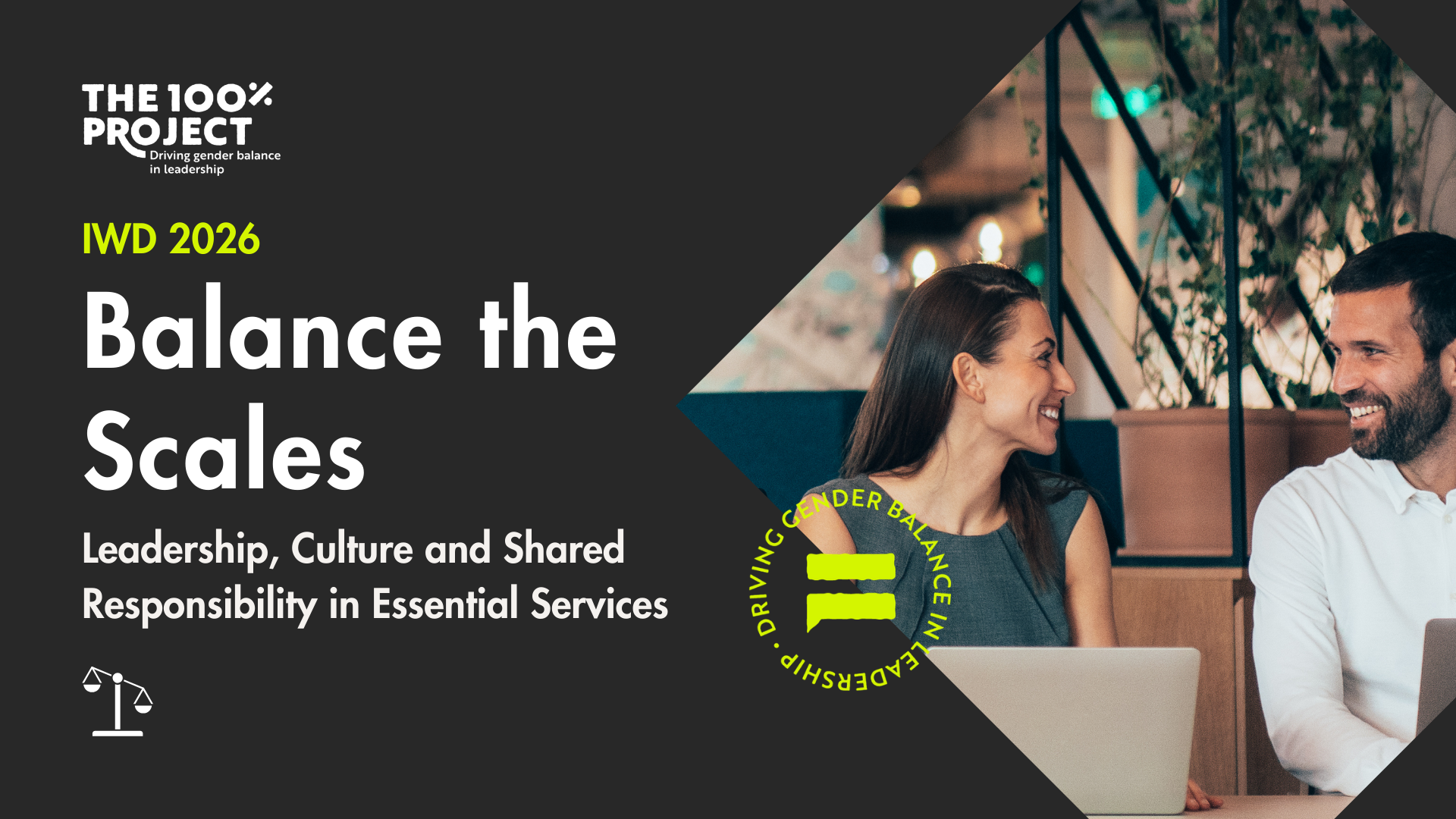
Balance the Scales: Leadership, Culture and Shared Responsibility in Essential Services
Gender equality in leadership remains an important conversation for organisations across Australia. International Women’s Day provides a moment to reflect on how workplace culture, leadership behaviour and practical initiatives can help create more balanced representation. Recently, The 100% Project joined Airmaster to discuss how organisations can take meaningful steps towards gender equality in leadership and workplace culture.
International Women’s Day provides an important opportunity for organisations to reflect on gender equality in the workplace. Across many industries, conversations about leadership, culture and shared responsibility are helping organisations move closer to balanced representation and inclusive decision making.
However, meaningful progress in gender equality and leadership representation rarely happens in a single moment. It develops over time through the many small decisions organisations make every day about leadership, culture and opportunity.
Earlier this month, The 100% Project joined the team at Airmaster for a discussion ahead of International Women’s Day. Co-Chair Kat Stevenson and Board Director Dav Lippasaar spoke with teams across Airmaster’s national branch network via livestream, exploring the theme “Balance the Scales: Leadership, Culture and Shared Responsibility in Essential Services.”
The session focused on how workplace culture and leadership practices shape gender equality outcomes within organisations.
Workplace culture and everyday leadership decisions
One key message from the discussion was that organisational culture is not defined solely by policies or statements.
Instead, culture is shaped by the choices people make every day.
In industries such as building services and essential infrastructure, where teams operate across multiple locations and job functions, these everyday decisions can have a wide impact across an organisation.
Leadership shows up in how people support colleagues, mentor emerging leaders, and create opportunities for others to grow.
During the session, Dav reflected on the importance of participation in creating change.

“Balancing the scales is not about being perfect. It is about showing up. It is about being willing to participate, lean in, and reflect on your own influence. Because progress does not happen when we wait until we are certain. It happens when people choose to engage.”
Turning conversation into action
A key part of the discussion centred on practical steps organisations can take to support gender equality in the workplace.
Over the past year, Airmaster has introduced several initiatives designed to create a more inclusive and balanced work environment. These include:
• Paid maternity leave
• Mentoring programs
• A school holiday care pilot
• Ongoing employee feedback helping guide future initiatives
These initiatives are supported by Airmaster’s Women’s Working Group and broader leadership engagement across the organisation.
Programs like these address real workplace challenges employees face, particularly when balancing career progression with family responsibilities.
More importantly, they demonstrate how organisations can make meaningful progress through consistent and practical improvements.
Leadership as shared responsibility
Another important theme from the session was the idea that leadership responsibility sits across an entire organisation.
Leadership is not limited to executives or senior management roles. It appears in everyday actions, from mentoring and supporting colleagues to creating inclusive teams.
When organisations encourage shared responsibility for culture, they create environments where more people feel empowered to contribute.
This idea aligns closely with the work of The 100% Project, which focuses on advancing gender balance in leadership through research, insights and practical guidance for organisations across Australia.
The importance of participation across the whole organisation is explored further in our article on the role of men in gender equality.
Encouraging broader involvement in gender equality discussions is also examined in Are Men the Missing Link in Gender Equity at Work, which looks at how workplace culture shifts when more people engage in the conversation.

Beyond International Women’s Day
International Women’s Day provides an important moment for organisations to pause and reflect on gender equality and leadership representation.
It offers an opportunity to review progress, identify challenges, and consider what steps may help create more inclusive workplaces.
But real progress rarely comes from a single event or initiative.
Instead, change develops over time through consistent leadership behaviour, inclusive policies and a willingness to listen to employee feedback.
Discussions like the one held with Airmaster show that progress is often built through practical actions rather than large declarations.
When organisations remain open to learning, testing new initiatives and supporting their people, meaningful change becomes possible.
International Women’s Day may begin the conversation.
But it is the ongoing commitment from organisations, leaders and employees that continues to move the dial towards more balanced leadership.
Continuing the conversation through research
At The 100% Project, our work focuses on advancing gender balance in leadership through research, insights and practical guidance for organisations.
Our research explores how leadership decisions, workplace culture and everyday organisational practices influence gender equality outcomes. By sharing evidence-based insights, we aim to support organisations in identifying practical actions to create more balanced leadership environments.
Through ongoing research and collaboration with organisations across Australia, The 100% Project continues to contribute to conversations that support meaningful progress in workplace gender equality.
To learn more about our research and insights, visit the Research section of our website.